2026 Best Compressed Air Filter for Optimal Performance and Efficiency?
In the quest for optimal performance and efficiency, choosing the right Compressed Air Filter is crucial. According to the Compressed Air and Gas Institute (CAGI), air quality can deteriorate without proper filtration. Contaminants in the air can lead to equipment failure and increased operational costs. A report from the International Journal of Advanced Manufacturing Technology states that up to 80% of air system problems stem from poor filtration.
Selecting the best Compressed Air Filter impacts several aspects of industrial operations. These include machinery lifespan and energy consumption. Studies show that renewable energy use increases with efficient filtration systems, saving about 12% on energy costs annually. However, not every filter is built the same. Some filters may trap larger particles but overlook microscopic ones. This brings the need for regular evaluation and adjustment of filtration methods.
Considering the best options for 2026 means understanding the evolving landscape of filtration technology. Innovative filters now incorporate advanced materials to enhance filtration efficiency. Despite advancements, companies must remain critical in their evaluations. The reliance on established brands shouldn’t overshadow the importance of testing new technologies. Compressed Air Filters are essential but require thoughtful selection and maintenance to truly achieve operational excellence.
Understanding Compressed Air Filters: Types and Functions
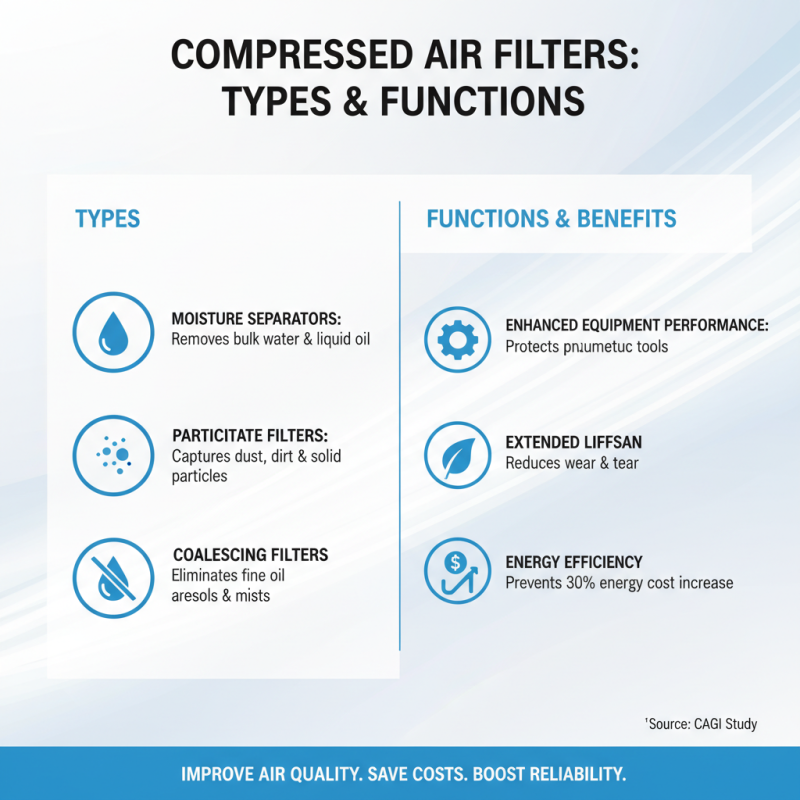
Compressed air filters play a pivotal role in enhancing air quality for industrial applications. Filters are essential for removing contaminants like moisture, dust, and oil. These impurities can significantly impact the performance and longevity of pneumatic tools, causing operational inefficiencies. According to a study by the Compressed Air and Gas Institute (CAGI), improper filtration can lead to a 30% increase in energy costs.
There are various types of compressed air filters available. Coalescing filters effectively remove water and oil aerosols, while particulate filters trap solid particles. Vapor filters, on the other hand, eliminate volatile substances. Each type serves a specific purpose. The effectiveness of a filter depends on its micron rating. A lower micron rating signifies the ability to trap smaller particles. However, it might also increase pressure drop, raising energy consumption.
Regular maintenance of filters is crucial. A clogged filter can reduce system efficiency. The International Institute of Compressed Air recommends replacing filters every 1,000 to 2,000 hours of operation, depending on the application. Neglecting this can lead to compressor damage and increased operational costs. Balancing filtration quality with energy efficiency will be an ongoing challenge for industries reliant on compressed air systems.
The Importance of Compressed Air Quality in Industrial Applications
In industrial applications, the quality of compressed air is critical. Poor air quality can lead to equipment malfunctions and product defects. Contaminants such as dirt, water, and oil can compromise the functioning of pneumatic tools. This not only affects productivity but can also increase maintenance costs over time. It’s vital to ensure that your compressed air system is free from these impurities.
Investing in high-quality compressed air filters enhances the performance of your system. These filters work to remove particulates and moisture, enabling cleaner air output. Despite their importance, many industries overlook regular maintenance. Filters need to be checked and replaced regularly. Neglecting this task can result in reduced efficiency and higher operational costs. A proactive approach can significantly improve system reliability and longevity.
Moreover, understanding the specific needs of your application is essential. Different processes may require different filtration levels. For instance, food processing and pharmaceuticals demand stricter air quality standards than other sectors. Regularly assessing your filtration setup ensures that it meets evolving industry standards. Recognizing shortcomings in your current air quality strategy can lead to improvements that save time and resources.
Key Features to Look for in the Best Compressed Air Filters
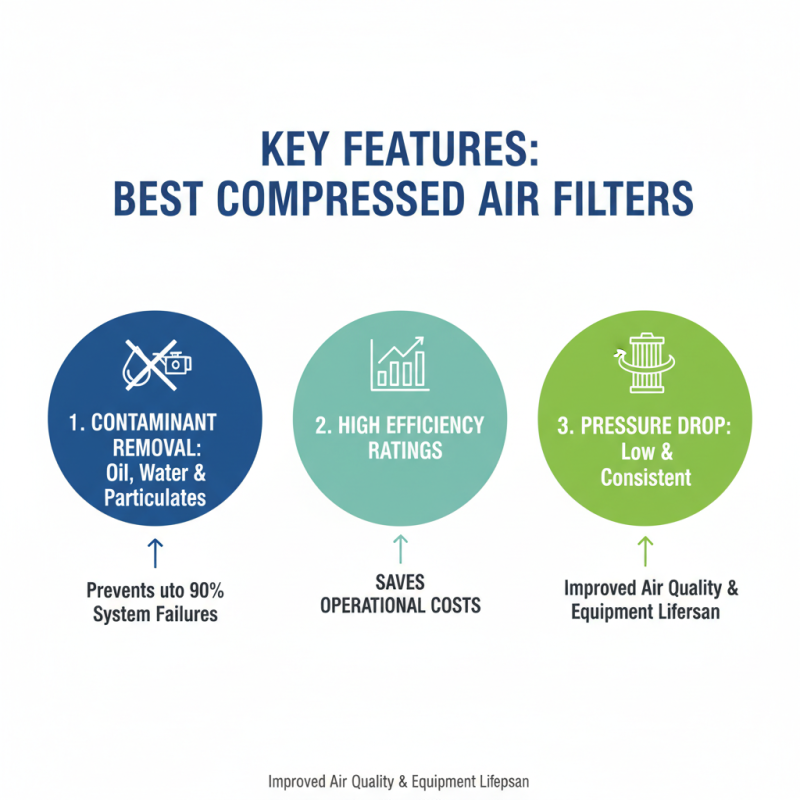
When selecting the best compressed air filter, key features influence performance and efficiency. Contaminant removal is crucial. Studies show that up to 90% of compressed air system failures are linked to these impurities. Choose filters designed to eliminate oil, water, and particulates. Efficiency ratings are important. A filter with a high efficiency rating can save significant operational costs.
Another vital consideration is the filter's flow rate. A well-matched flow rate ensures that air delivery remains consistent. Filter clogging can cause pressure drops, affecting equipment performance. Regular maintenance and monitoring are necessary to prevent this issue. Pressure drop across a filter should ideally stay below 5 psi to minimize energy wastage.
Durability affects long-term performance. Filters made from corrosion-resistant materials can extend their lifespan. Research indicates that the total cost of ownership can double if replacements are frequently needed. Investing in high-quality construction is sound. End users must not overlook warranty and support services. Reliable technical support adds value, contributing to overall efficiency.
Top Brands and Models for 2026: A Comprehensive Review
In 2026, choosing the right compressed air filter is crucial for performance and efficiency. Many businesses overlook the significance of quality filtration. The right filter can prevent damage to equipment, ensuring longer life and fewer repairs. It's essential to evaluate the type of contaminants in your environment.
Dust, water, and oil can compromise the integrity of your air system. A good filter addresses these issues, but no filter is foolproof.
Several top brands offer various models that cater to specific needs. Reviewing the specifications of each filter model helps in making informed decisions. Some filters excel in removing particulates, while others focus on moisture control. This distinction is vital based on your operations. Users should reflect on the filter's maintenance requirements too. Some models may need frequent replacements, leading to additional costs.
Reliability is not just about brand reputation. It's about how a filter integrates into your existing systems. Understanding your workflow helps in selecting the optimal model. Each filter has limitations, which invite a necessary evaluation. Can it handle peak demands? Will it perform consistently? These questions guide you toward the best choice for your needs.
Maintenance Tips for Ensuring Optimal Filter Performance and Efficiency
Maintaining your compressed air filter is crucial for optimal performance. According to the Compressed Air and Gas Institute (CAGI), regular maintenance can improve efficiency by up to 30%. Dirty filters can lead to system difficulties. This often results in increased energy costs and decreased productivity.
Inspect your filters monthly. Look for signs of wear or clogging. A simple visual check can help identify problems early. Change filters based on usage. CAGI suggests replacing filters every 1,500 operational hours or sooner in dirtier environments. Neglecting this can reduce airflow by 15% or more.
Don’t overlook drain traps. Moisture buildup can damage filters. Regularly empty and check these traps to ensure efficient operation. Consider digital monitors for real-time feedback. These tools can help catch issues before they escalate. A proactive approach can reduce costly downtime and enhance overall efficiency.
2026 Best Compressed Air Filter for Optimal Performance and Efficiency
| Filter Type |
Efficiency Rating |
Max Flow Rate (CFM) |
Replacement Interval (Months) |
Operating Pressure (PSI) |
| Particulate Filter |
99.9% |
150 |
12 |
100 |
| Coalescing Filter |
99.9% |
120 |
6 |
100 |
| Activated Carbon Filter |
99.5% |
100 |
12 |
90 |
| Refrigerated Dryer |
N/A |
200 |
24 |
80 |
| Desiccant Dryer |
N/A |
150 |
12 |
100 |