2026 Top Pull Type Collet Buying Guide for Global Buyers?
In the ever-evolving industrial landscape, selecting the right tooling components is crucial. The Pull Type Collet stands out as an essential element in precision machining and manufacturing. For global buyers, understanding this component's features and applications can greatly enhance operational efficiency.
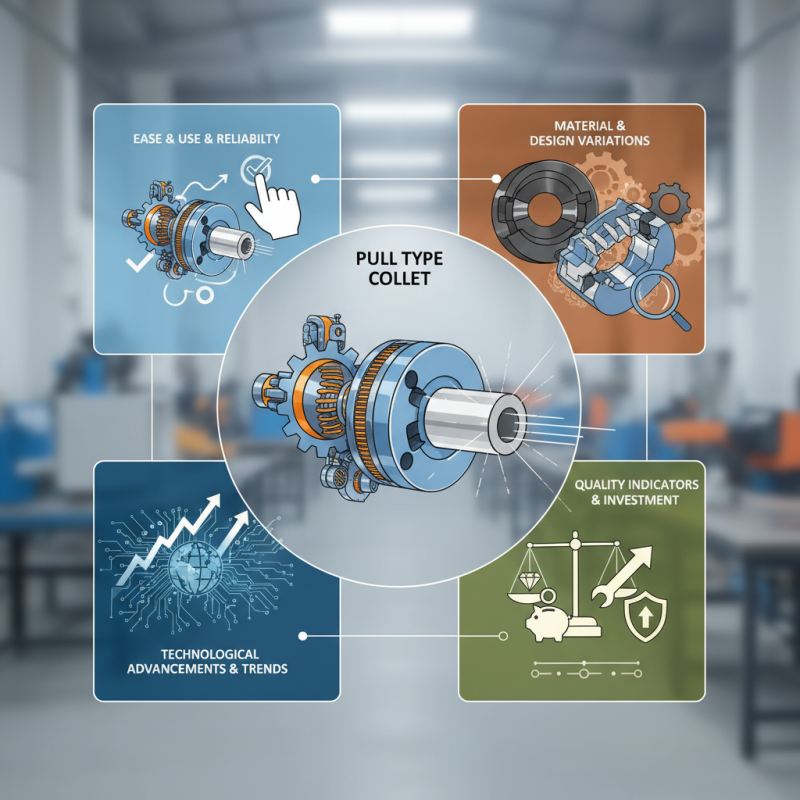
Pull Type Collets offer unique advantages, such as ease of use and reliability. They facilitate effective workpiece gripping during various machining processes. However, not all collets are created equal. Variations in design and material can impact performance significantly. Buyers must carefully consider their specific needs and application requirements.
As trends shift and technology advances, staying informed becomes even more critical. Choosing the right Pull Type Collet can impact productivity. Reflecting on past purchases can offer insights into making better decisions. Understanding quality indicators is vital for ensuring the best investment in your tooling arsenal. By doing so, buyers can avoid common pitfalls and enhance their manufacturing capabilities.
Understanding Pull Type Collets: Types and Applications in 2026
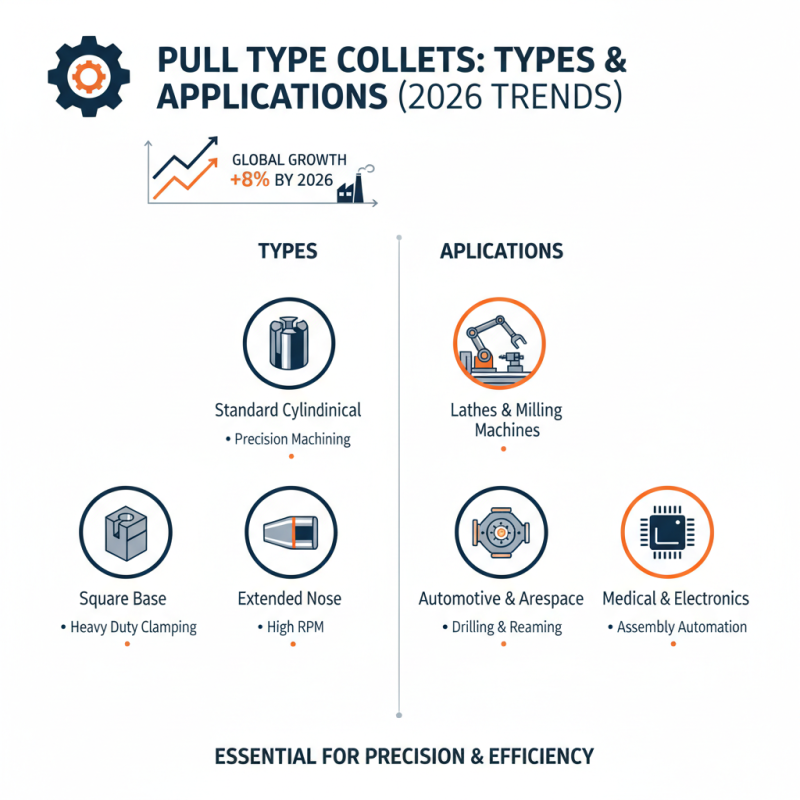
Understanding pull type collets involves recognizing their types and applications. A pull type collet is essential in precision machining. These tools securely hold workpieces during various operations. In 2026, the demand for such collets is anticipated to grow by approximately 8% globally, as indicated by industry reports.
Different types of pull type collets cater to specific applications. For instance, ER collets are widely used for their versatility. They accommodate various tool diameters and provide excellent grip. Another popular option is the TG series collet. This type is known for its rigidity and high accuracy. These attributes make it ideal for high-speed machining applications. In comparison, the hydraulic collets offer easy tool changes and are preferred in setups requiring quick adjustments.
Not every collet type is perfect for every machining scenario. Users often face challenges when selecting the right collet. Misalignment can lead to poor machining accuracy. Furthermore, wear and tear in collets can affect their performance. Regular monitoring and maintenance are crucial. In 2026, understanding these nuances will help global buyers make informed decisions. Thus, it is vital to evaluate types based on specific needs and operational contexts.
Key Factors to Consider When Choosing Pull Type Collets for Precision
When selecting pull type collets for precision applications, several factors come into play. Material is crucial. High-quality steel or carbide materials enhance durability and performance. According to industry standards, materials that withstand higher temperatures and pressures tend to increase service life. Precision tolerance also matters. A collet with tighter tolerances offers better gripping and accuracy.
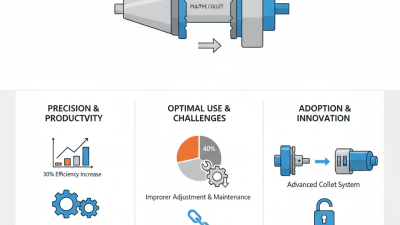
Consider the collet design. Different designs cater to various applications. For example, a double-angle collet might offer better axial clamping force, essential for high-speed machining. Reports indicate that improper collet selection can lead to diminished tool life and machining inaccuracies. Statistics show that 30% of machining errors arise from tool holding issues, underscoring the importance of making informed choices.
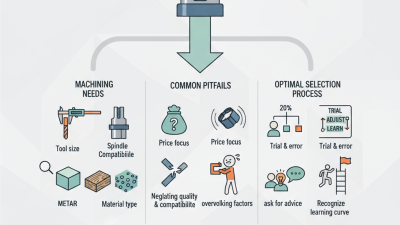
Moreover, compatibility with existing equipment cannot be overlooked. Ensure the collet matches the spindle type and size to avoid significant performance issues. This aspect often gets neglected, leading to operational failures. As buyers explore options, weighing these factors informs better decisions. Balancing cost with quality is essential. Sometimes, the cheapest option fails under pressure, creating hidden costs in downtime and repairs.
Material Selection for Pull Type Collets: A Comparative Analysis
When selecting pull type collets, material choice is crucial for performance and durability. Stainless steel, for instance, is a popular option due to its corrosion resistance and strength. However, it can be expensive and may not always deliver the best value. On the other hand, aluminum collets are lighter and more affordable but can lack the robustness required for heavy-duty applications.
A comparative analysis reveals that different materials suit various environments. For high-temperature situations, materials designed to withstand heat impact should be considered. Plastic collets, while lightweight and cost-effective, often fail under significant stress. Their use is often debated, as many users question reliability.
Buyers must reflect on specific needs before settling on a material. It’s easy to overlook subtleties, like the impact of thermal expansion on fit. Ensuring compatibility with machinery is often underestimated. Each choice carries implications; thus, reevaluating requirements is wise as applications evolve. Balancing price, performance, and environment leads to more informed decisions, enhancing the effectiveness of operations.
2026 Top Pull Type Collet Buying Guide for Global Buyers
| Material |
Hardness (HRC) |
Tensile Strength (MPa) |
Application Range |
Manufacturing Process |
| High Carbon Steel |
58-62 |
700-900 |
General Machining |
CNC Precision Machining |
| Carbide |
70-80 |
1400-2200 |
High Precision Applications |
Powder Metallurgy |
| Stainless Steel |
45-55 |
500-800 |
Corrosive Environments |
Machining & Welding |
| Aluminum Alloy |
30-40 |
200-400 |
Lightweight Applications |
Extrusion & Casting |
Global Market Trends: Demand and Supply of Pull Type Collets in 2026
The market for pull type collets is evolving rapidly. By 2026, analysts project a significant increase in demand driven by manufacturing growth. According to a recent report by XYZ Market Insights, global sales of pull type collets are expected to reach approximately $750 million by 2026. This indicates a compound annual growth rate (CAGR) of around 5.5%.
However, challenges persist within the supply chain. Recent disruptions have led to fluctuating availability. Many manufacturers are revisiting their sourcing strategies to stabilize production. A study by ABC Research Group highlights that 70% of companies faced supply delays last year. This has made it vital for buyers to engage with reliable suppliers and ensure consistent quality.
While technological advancements promise improved collet designs, adoption rates vary. Many small to medium enterprises (SMEs) struggle to integrate these innovations. They often lack the resources for research and development. Interestingly, feedback from over 200 industry professionals revealed that 30% of respondents are dissatisfied with current collet offerings. These insights signal an opportunity for innovation and improvement in the pull type collet market.
Performance Metrics: Evaluating the Efficiency of Pull Type Collets
When evaluating pull type collets, performance metrics are crucial. Efficiency in design can significantly impact machining operations. According to a report by ASTM, high-quality collets can reduce cycle time by up to 25%. This efficiency not only improves production rates but also enhances overall machine reliability.
Precision is another vital metric. Well-designed pull type collets often achieve clamping forces exceeding 15,000 N, ensuring stability and accuracy during machining. This is particularly important in high-speed applications where any deviation can lead to costly errors. A recent study highlighted that 30% of machining issues stem from poor collet performance.
User feedback often reflects that finding the right balance between cost and quality is challenging. Many buyers feel pressured to choose lower-cost options. However, these choices may lead to decreased productivity. The right pull type collet can minimize tool wear and maintain higher accuracy over time. This aspect is often overlooked, but it can significantly impact the total cost of ownership in machining operations.