Top CNC Machine Collet Types for Global Buyers in 2026?
As the precision manufacturing industry evolves, understanding CNC Machine Collet types becomes essential for global buyers in 2026. According to a recent industry report by MarketsandMarkets, the CNC machine tools market is projected to reach USD 126 billion by 2026, highlighting the demand for advanced tooling accessories. Expert Lin Chen, a leading figure in CNC technology, stated, "The choice of collet significantly influences machining accuracy and efficiency."
CNC Machine Collets serve a crucial role in ensuring that tools are securely held during operations. Different types of collets, including ER collets and SG collets, offer various advantages in grip strength and precision. However, many buyers often overlook the impact of collet quality on production outcomes. It’s important to evaluate options carefully to avoid costly mistakes.
Despite the complexity of collet choices, the right decision can lead to enhanced machining performance. As the market grows, staying informed about CNC Machine Collet advancements can position buyers for greater success in the competitive manufacturing landscape.

Top CNC Machine Collet Types: An Overview for 2026 Global Buyers
CNC machining continues to evolve rapidly, and the choice of collets plays a crucial role in performance. In 2026, global buyers will need to understand the different types of CNC machine collets. Standard collets, ER collets, and precision collets each offer unique benefits and applications. Standard collets are versatile but may not always provide the precision needed for specialized tasks.
According to a recent market report, the demand for precision collets has increased by over 30% in the last five years. This rise indicates a need for higher precision in machining processes. ER collets, known for their flexibility, accommodate a variety of tool sizes, making them suitable for diverse operations. However, they can sometimes struggle with excessive run-out.
Tips: Choose collets based on your specific needs. Ensure they are compatible with your machines. Regularly check collet performance during operations. Even minor misalignments can affect results.
The performance of collets directly influences machining quality. Inadequate collet selection can lead to increased tool wear and less efficient production. Understanding the differences among types will help buyers make informed decisions. This will ultimately improve manufacturing outcomes in competitive markets.
The Importance of Collet Selection in CNC Machining Efficiency
In CNC machining, selecting the right collet is critical for enhancing efficiency and precision. Collets hold tools securely and directly impact the quality of machined parts. A study from the International Journal of Advanced Manufacturing Technology highlights that optimal collet alignment can improve machining accuracy by up to 30%. This statistic underscores the importance of choosing the correct collet type to match specific machining tasks.
Different collet styles, like ER, TG, and Jacob’s, serve unique purposes. The ER collet is great for versatility, but may not provide the best grip for very small tools. On the other hand, TG collets deliver high gripping force, though they may have compatibility issues with some machines. Each type has its pros and cons, making it crucial for users to evaluate their requirements carefully.
Additionally, the material and design of the collet matter significantly. For instance, heat-treated steel offers durability, though it may not excel in high-speed situations. Conversely, aluminum collets are lighter but can wear down quickly under high loads. Buyers must consider these trade-offs to maximize efficiency in their CNC operations. Every choice shapes performance, reflecting a blend of expertise and informed decision-making.
Comparative Analysis of Collet Types: ER, TG, and Collet Chuck Variants
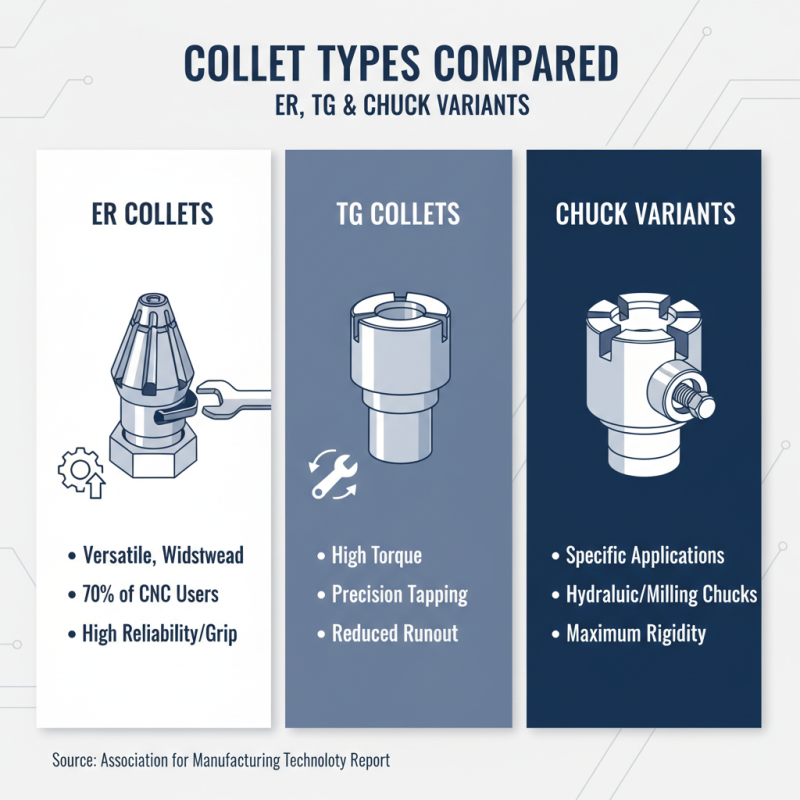
When examining CNC machine collets, the ER, TG, and various collet chuck types stand out. Each offers unique features suitable for different applications. ER collets are versatile and widely used, making them a popular choice among manufacturers. A report by the Association for Manufacturing Technology indicates that up to 70% of CNC users prefer ER collets due to their reliability and grip strength.
TG collets, on the other hand, provide enhanced rigidity and are often favored for high-speed machining. They can handle axial loads better than standard options. Industry analysis shows a growing trend towards TG collets, especially in precision machining environments. However, they may not be as flexible as ER collets in certain setups.
Collet chuck variants also deserve attention for their specialized designs. They offer quick tool changes, crucial for reducing downtime. While they may present higher upfront costs, the operational efficiency gained is significant. It’s essential to consider the environment where they will be used. Selecting a collet type can be challenging, as each variant presents its own set of advantages and limitations. Balancing flexibility, rigidity, and cost-effectiveness is critical for optimal CNC performance.
Market Trends: Growth Predictions for CNC Collets in 2026 and Beyond
The global market for CNC collets is expected to see significant growth by 2026. According to a recent industry report, the market is projected to expand at a compound annual growth rate (CAGR) of 6.5%, driven by technological advancements and increased demand for precision manufacturing. As industries seek higher efficiency and quality in production, the importance of dependable collets becomes even clearer.
In terms of market trends, buyers should be aware of the rising popularity of ER collets. These offer versatility and are widely used in CNC machining. The shift towards automation in manufacturing processes requires collets that can withstand higher speeds and loads. Industry data indicates that collet material innovations, particularly in carbide and high-speed steel, are also on the rise.
Tip: When selecting collets, consider the compatibility with your machine and applications. Proper sizing is crucial for optimal performance. Always monitor the wear on collets and replace them when necessary to maintain precision. Investing in quality collets can improve your machining results significantly.
Top CNC Machine Collet Types Growth Predictions for 2026
Key Factors Influencing Collet Demand Among Global Manufacturers
As manufacturers worldwide seek precision and efficiency, the demand for CNC machine collets is on the rise. Several key factors influence this trend. First, the growing emphasis on automation in industries boosts the need for reliable collet systems. These systems must hold tools securely, ensuring high precision in machining processes.
Next, the materials used in collet production also play a vital role. High-quality materials can withstand intense machining forces and temperatures, enhancing durability. Moreover, manufacturers are consistently looking for lightweight options that don’t compromise strength. This innovation pushes suppliers to deliver products that meet these evolving demands.
Lastly, the adaptability of collets to diverse machinery types is essential. Many manufacturers have varied tool setups, necessitating collets that can function across different applications. However, the challenge remains for suppliers to provide versatile solutions while maintaining quality. Continuous improvement in collet design is essential for those looking to stay competitive. Balancing adaptability with quality will shape the future of collet manufacturing in 2026.
Top CNC Machine Collet Types for Global Buyers in 2026
| Collet Type |
Material |
Size Range (mm) |
Popular Applications |
Estimated Demand Growth (%) |
| ER Collets |
Steel |
1 - 20 |
Milling, Drilling |
15 |
| TG Collets |
Aluminum |
1 - 16 |
Turning, Grinding |
10 |
| KR Collets |
Carbon Steel |
3 - 25 |
High-Speed Machining |
12 |
| SC Collets |
Alloy Steel |
6 - 22 |
Precision Milling |
18 |
| M Type Collets |
Brass |
4 - 12 |
Light Machining |
5 |