Why Do You Need Industrial Air Purifiers for Your Business?
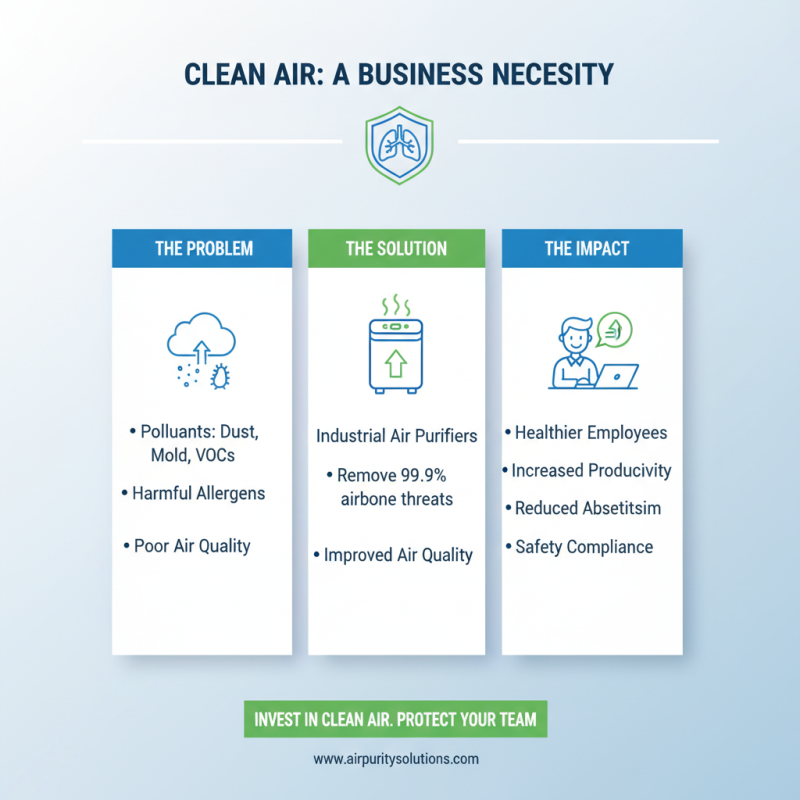
In today’s fast-paced industrial environment, air quality is often overlooked. However, it plays a crucial role in employee health and productivity. Industrial air purifiers are essential. These systems can remove harmful particles, chemicals, and allergens from the air. A cleaner workplace leads to fewer respiratory issues and better focus among staff.
Businesses often underestimate air pollution's impact on operations. For instance, dust and fumes can compromise machinery, leading to costly repairs. Using industrial air purifiers mitigates these risks. They not only improve air quality but also enhance equipment longevity. A well-functioning workspace boosts morale and innovation.
Implementing these purifiers is not just a trend. It is a necessary investment. Ignoring air quality can result in negative consequences. Employee turnover and health insurance costs may rise. Businesses need to reflect on their air quality management strategies. The choice is clear: prioritize industrial air purifiers for a healthier workplace.
The Importance of Air Quality in Industrial Settings
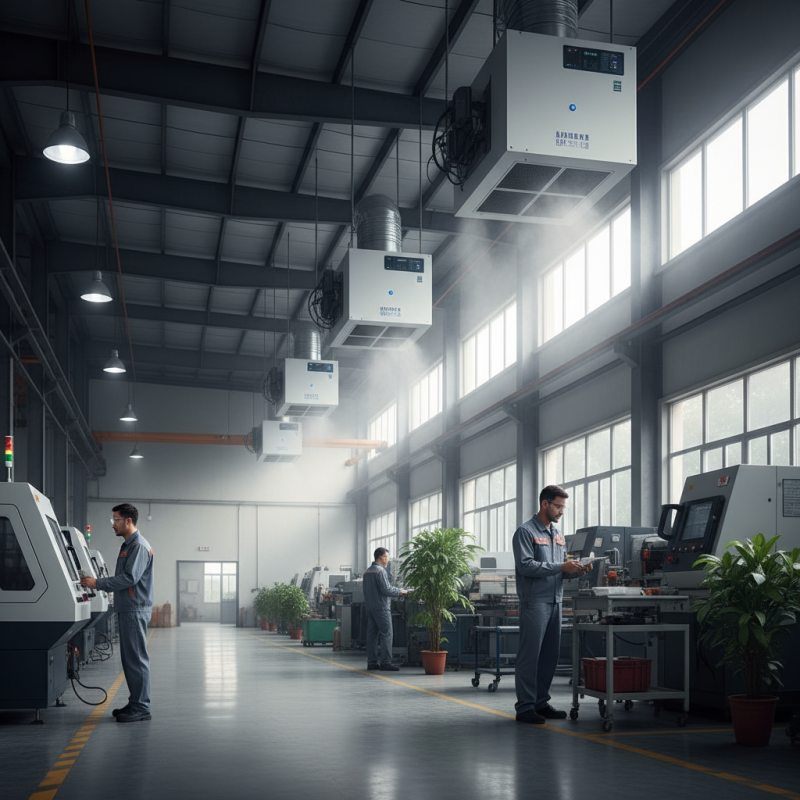
In industrial settings, air quality plays a crucial role in workers’ health and productivity. When the air is contaminated, employees often experience fatigue and decreased motivation. Dust, fumes, and gases can linger, causing respiratory issues over time. This impacts not only individual health but also overall workplace efficiency.
Moreover, poor air quality can lead to significant long-term problems. Machinery may suffer due to the accumulation of pollutants. This can cause breakdowns, leading to costly repairs and halted production. In some cases, inadequate ventilation creates a suffocating atmosphere, making it hard for workers to concentrate.
Businesses must pay attention to their air quality. Regular air quality assessments can reveal hidden issues. An investment in industrial air purifiers is not just about compliance; it’s about creating a healthier environment for employees. The cost of neglecting air quality is high, often underestimated until it’s too late.
Understanding the Basics of Industrial Air Purifiers
Industrial air purifiers are vital for maintaining a healthy work environment. They filter harmful particles, gases, and microorganisms from the air. This process improves air quality, which benefits both employees and production processes. Poor air quality can lead to health issues, reduced productivity, and even safety hazards.
When considering industrial air purifiers, think about the specific needs of your facility. Different environments require different filtration systems. Some focus on dust removal, while others target pollutants like VOCs or odors. Evaluating your workspace is crucial. Don't overlook the types of contaminants present in your facility.
**Tips:** Regular maintenance is key. Change filters as recommended to ensure optimal performance. Assess the air quality periodically to gauge the effectiveness of your purifier. A little attention to detail can make a big difference in air quality.
Benefits of Industrial Air Purifiers for Businesses
Key Benefits of Using Air Purifiers for Businesses
Industrial air purifiers are critical for maintaining a healthy workplace. They remove harmful pollutants and allergens, improving air quality significantly. Many businesses overlook this aspect of health and safety. Poor air quality can lead to decreased productivity and employee absenteeism. Dust, mold, and VOCs can linger, affecting everyone.
Investing in air purifiers can lead to noticeable benefits. Employees may feel more energized and focused. A cleaner atmosphere can enhance morale. Some companies might struggle with this, underestimating the impact of fresh air. Regular maintenance becomes essential to ensure these systems work effectively.
The positive effects of cleaner air are measurable. It reduces the risk of respiratory issues among staff. Improved air quality also reflects a business's commitment to employee well-being. However, the initial cost may be daunting for some. Balancing budget constraints with health needs poses a challenge.
Types of Industrial Air Purifiers and Their Applications
Industrial air purifiers are crucial for maintaining a safe and healthy work environment. Different types of air purifiers serve unique functions.
HEPA filters, for instance, capture 99.97% of airborne particles. This includes dust, pollen, and mold spores. They are ideal for clean rooms or medical facilities, where air quality is paramount.
Activated carbon purifiers excel at removing odors and harmful gases. They are particularly useful in industries such as food processing or painting. However, relying solely on them may not eliminate all pollutants.
Ultraviolet (UV) air purifiers kill bacteria and viruses but should be used alongside other systems for best results.
Businesses must also consider their specific needs when selecting air purifiers. Size, airflow capacity, and filter longevity are essential factors. Some companies may overlook maintenance schedules, leading to reduced effectiveness.
Regular checks are critical to ensure that air purifiers operate optimally. Balancing cost and efficiency is often a challenge, but it is necessary for a healthier workspace.
Regulatory Standards and Compliance for Air Quality in Industries
Industrial air quality is crucial for a safe working environment. Many industries face strict regulatory standards for air quality. For instance, OSHA sets permissible exposure limits for various harmful substances in the workplace. Non-compliance can lead to hefty fines and workplace incidents.
Recent studies show that over 50% of manufacturing facilities struggle to meet these air quality standards. They often ignore the impact of poor air quality on employee health and productivity. Poor air quality can lead to respiratory issues and lower morale among workers. This is not just an operational risk; it affects the bottom line.
Investing in industrial air purifiers can help businesses comply with these regulations. Effective air purifiers can reduce airborne contaminants by up to 99%, significantly improving air quality. Many companies find that cleaner air boosts employee performance and reduces absenteeism. However, some still hesitate to implement these solutions. They may overlook the long-term benefits of healthier workplaces and better compliance. Ignoring this aspect can lead to regret when faced with regulatory audits.
Why Do You Need Industrial Air Purifiers for Your Business? - Regulatory Standards and Compliance for Air Quality in Industries
| Industry |
Primary Pollutants |
Regulatory Standard |
Compliance Frequency |
Recommended Air Purifier Type |
| Manufacturing |
VOCs, Dust, Particulates |
OSHA PELs |
Quarterly |
HEPA Filter + Carbon Filter |
| Healthcare |
Bacteria, Viruses, Allergens |
OSHA Bloodborne Pathogens Standard |
Monthly |
UV-C + HEPA Filter |
| Food Processing |
Mold, Bacteria, Odors |
FDA Food Safety Standards |
Biweekly |
Activated Carbon + HEPA Filter |
| Construction |
Silica Dust, Asbestos |
EPA Standards |
Weekly |
High-Performance Dust Filter |
| Chemical Processing |
Fumes, VOCs, Toxic Chemicals |
EPA & NIOSH Standards |
Monthly |
Chemical Filter + HEPA Filter |